A complete guide to picking a wood floor color that won’t leave you with regrets
You’ve picked your floor, you’ve settled on engineered wood, and you’re ready to go. But then comes the part that stops many homeowners cold: what color should it be?
It’s a fair question. Walk into any showroom and you’re faced with rows of samples — light, dark, grey, golden, smoked, whitewashed. They all look beautiful under the showroom lights. But will they look beautiful in your home?
This guide walks you through the practical logic of choosing a wood floor color — not a trend, not a guess, but a choice that works for your space, your lifestyle, and your budget.
First, Understand Your Room
Before you look at a single sample, look at your room.
Lighting Is Everything
The single biggest factor in how a floor color appears is the light it receives .
In a south-facing room with large windows and plenty of natural light, you have freedom — dark, light, or mid-tones all work. The depth of a dark walnut floor will show beautifully without making the room feel closed in .
In a north-facing room or a room with small windows and limited daylight, dark floors are risky . They absorb light, making the space feel smaller, darker, and heavier. In this situation, lighter floors are not just a style choice — they are a functional one .
A simple test:
Hold a floor sample against your floor in the actual room at different times of day. A color that looks beautiful in the showroom may look like a completely different shade in your home.
Room Size Matters
Size and light work together.
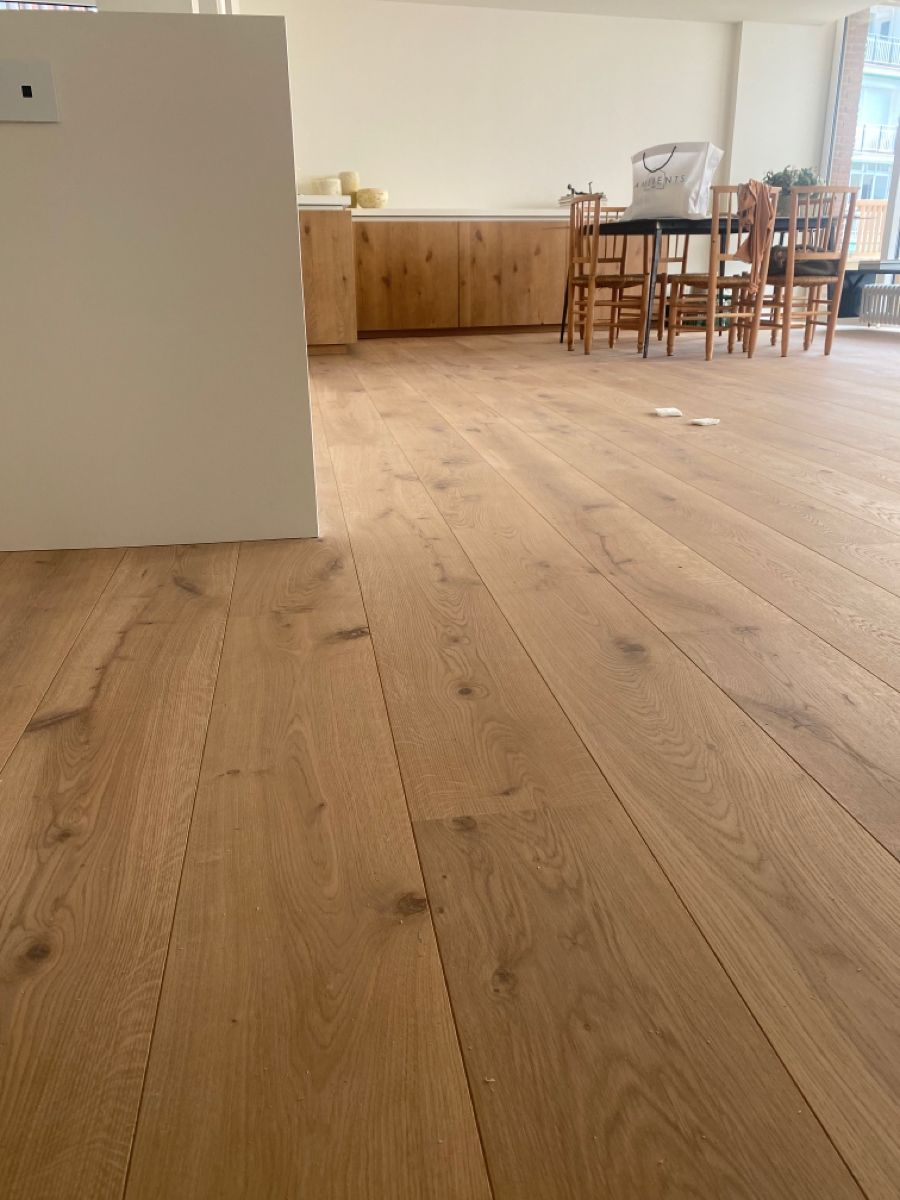
Small rooms look larger with lighter floors. A light oak or pale grey floor blends with the walls, softening the visual boundaries of the space .
Large rooms can carry darker floors. A deep brown, coffee, or smoked oak anchors the space and gives it a grounded, high-end feel .
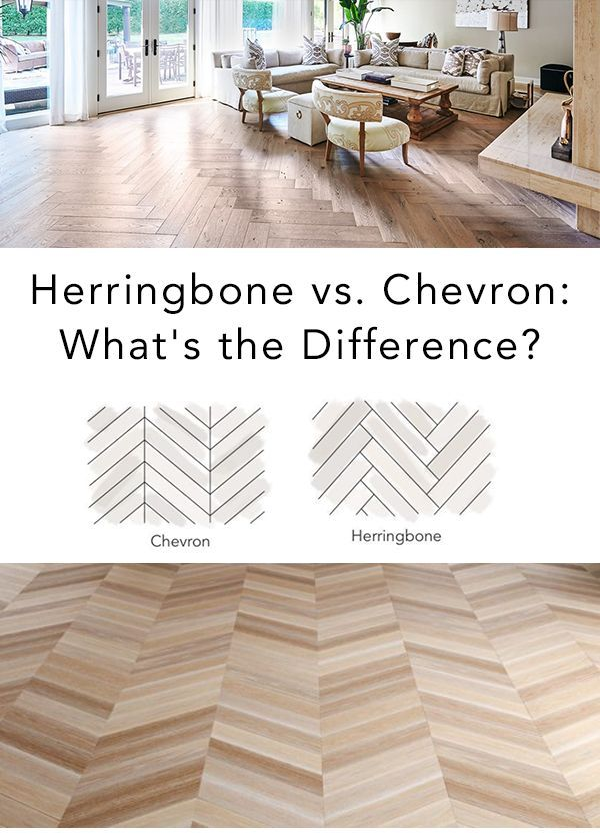
Wide planks laid in the same direction as the longest wall also help a room feel more spacious. Herringbone and chevron patterns can add depth, but they come with higher costs and require more skill to install .

The Color Families: What Each Tone Does
Light Oak & Natural Woods
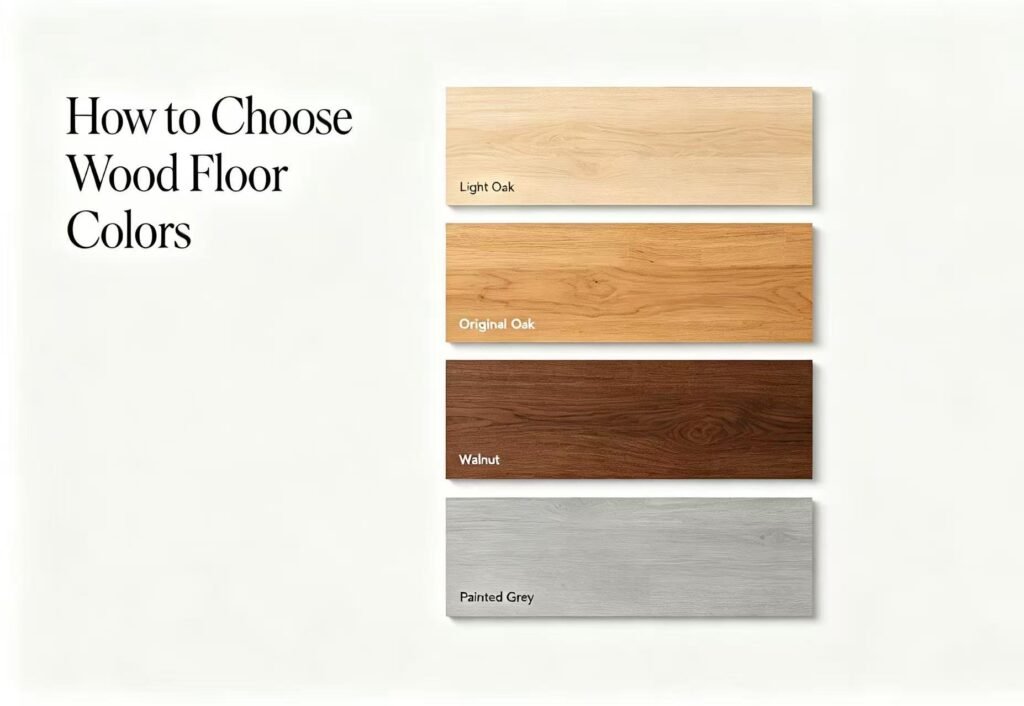
Light oak is one of the most forgiving and versatile choices . It bounces light around the room, hides dust and minor scratches well, and works with most interior styles — from Scandinavian minimalism to modern country.
Best for: Small rooms, rooms with limited natural light, busy households, and anyone who wants a floor that won’t date quickly.
Risk: Very low. It’s the safest starting point .
Mid & Golden Tones
Think honey brown, chestnut, wheat, and warm caramel . These are the colors that feel immediately welcoming. They hide everyday wear better than both very light and very dark floors and pair well with both traditional and modern furniture.
Best for: Family homes, living rooms, open-plan spaces, and anyone who wants a warm, lived-in feel.
Risk: Low. These tones have been strong sellers for years and show no signs of fading .
Dark & Smoked Oak
Dark floors add drama. Walnut, espresso, and smoked oak bring depth and a sense of luxury to a room . They work best in large, light-filled spaces where they can add contrast without making the room feel smaller.
Best for: Large rooms with good natural light, formal living spaces, and projects where the client wants a premium, high-contrast look.
Risk: Dark floors show dust, footprints, and scratches more clearly . They are a choice that requires regular maintenance and care.
Grey & Whitewashed
Grey floors remain popular in contemporary and minimalist interiors . A grey-washed oak floor feels cool, modern, and works particularly well with clean lines and neutral palettes.
Best for: Modern kitchens, Scandinavian-style homes, and rental properties.
Risk: The peak of the grey trend has passed. In some markets, grey floors can feel like a trend rather than a timeless choice.
The Rule to Remember
The safest, most reliable color strategy is this:
“Choose a mid-tone, natural-looking floor and let the furniture do the talking.”
A floor in a natural oak or honey brown sits quietly underfoot. It doesn’t compete with your furniture, your wall color, or your decor. It acts as a canvas — and that means it gives you freedom to change your furniture and paint without having to replace the floor .
What to Avoid
High-Saturation Red Tones
Floors with a strong red undertone are famously difficult to match with furniture and decor . Unless your interior style is built around that specific color, it’s a common regret.
Overly Busy Grain Patterns
Large, dramatic grain patterns can look stunning in a showroom but can feel chaotic in a small room . Fine, straight grains are more versatile and easier to live with.
Matching Your Floor to a Trend
Trends change. Your floor won’t. A color that is fashionable today may feel dated in five years. Choose a natural, timeless tone that will still look right a decade from now .
A Note on Samples
One of the most common mistakes when choosing a floor color is relying on showroom lighting.
Showroom lights are often warm-toned and positioned to make samples look their best. The same sample seen in your home under natural light — especially in the evening — can look noticeably different .
The practical fix:
Ask to take samples home.
View them in the room where they will be installed.
Check them at different times of day: morning, midday, and evening.
This simple step saves a surprising number of regrets.
What This Means for Your Project
Choosing the right wood floor color is not about finding the “perfect” shade — it’s about finding the shade that works for your space, your lifestyle, and your long-term plans.
If your room lacks natural light, go lighter.
If your room is large and bright, you have flexibility.
If you want a floor that will still look good in ten years, avoid strong trends and choose a natural mid-tone.
If you’re a contractor or retailer recommending colors to clients, steer them toward colors with a proven sales track record: light natural, honey brown, and mid-tone oak remain the strongest choices .
Ready to explore engineered wood flooring for your project? We offer a wide range of colors and finishes — factory-direct at competitive prices.
📩 Contact us for catalog and samples.