Engineered vs. Solid Hardwood: Which One Should Your Contractors Recommend?
A practical guide for contractors, builders, and project managers — straight from the manufacturer’s perspective.
The Question Every Contractor Faces
You’re on a job site. The client wants “real wood floors.” But they’re also asking about price, durability, and whether it’ll work in the basement. You know solid hardwood has the reputation, but engineered hardwood keeps coming up as the practical choice.
So which one do you recommend?
As a manufacturer of engineered wood flooring, we see this question every day. And the honest answer is: it depends on the project. But here’s what we’ve learned from working with contractors across hundreds of installations — and how you can make the right call every time.
First, What’s the Real Difference?
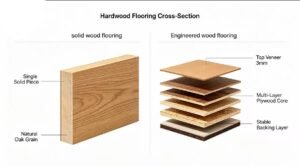
Solid hardwood is exactly what it sounds like — a single piece of solid wood from top to bottom. It’s classic, authentic, and can be refinished over and over again. But it’s also temperamental: it expands, contracts, and warps with changes in humidity .
Engineered hardwood has a real wood surface (the “veneer” or “wear layer”) bonded to a multi-layer plywood or HDF core. The cross-layered construction makes it far more stable than solid wood — it resists warping, cupping, and gapping, even in challenging environments .
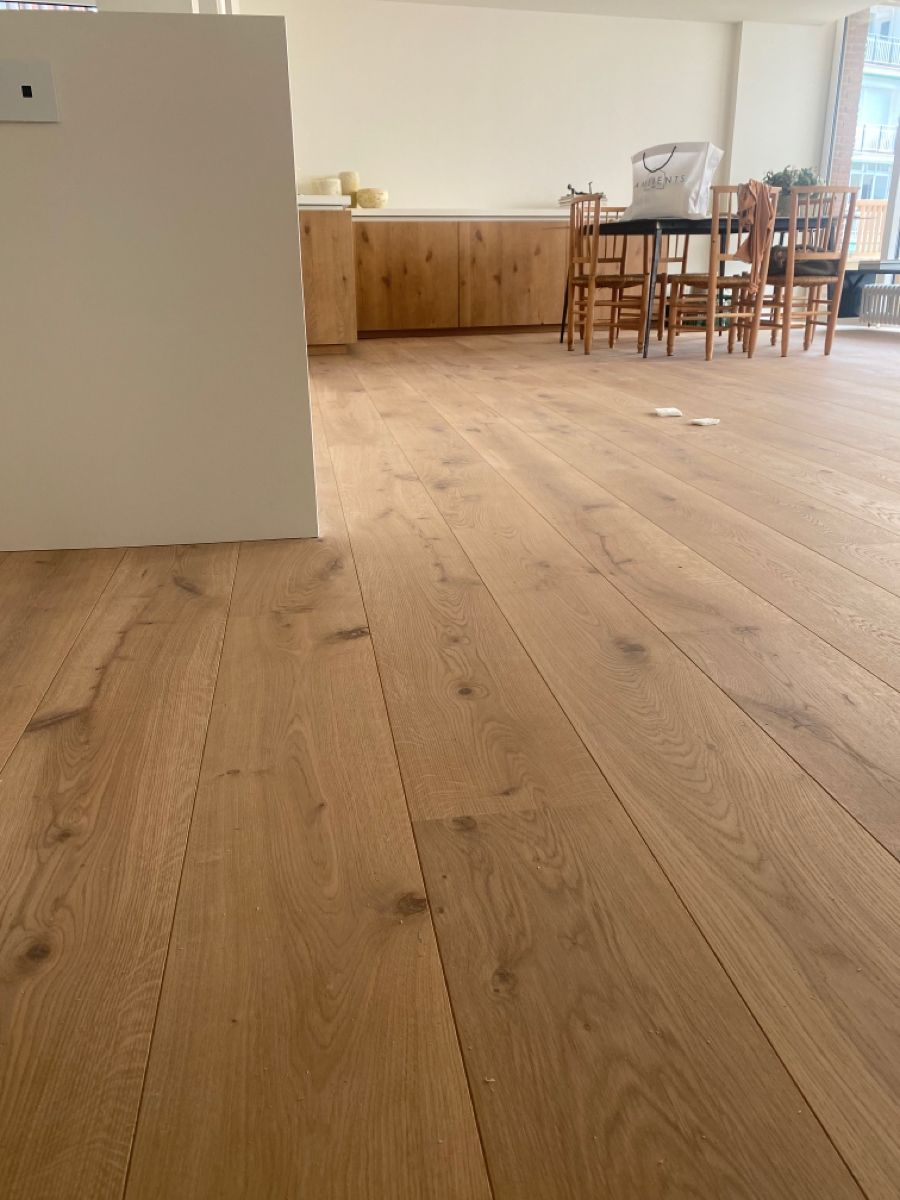
Visually, they’re almost identical. Both use real wood on the surface. Once installed, even experienced contractors sometimes can’t tell the difference .
Head-to-Head Comparison
Construction
Solid Hardwood: Single solid piece of wood.
Engineered Hardwood: Real wood veneer + plywood or HDF core.
Stability
Solid Hardwood: Expands and contracts significantly with humidity changes.
Engineered Hardwood: Cross-ply construction minimizes movement and resists warping.
Moisture Resistance
Solid Hardwood: Moderate — not recommended for basements or slab-on-grade installations.
Engineered Hardwood: Superior — suitable for basements, concrete slabs, and humid climates.
Refinishing Potential
Solid Hardwood: 4 to 7 times over its lifespan.
Engineered Hardwood: 1 to 3 times, depending on veneer thickness (3mm+ allows at least one full refinish).
Lifespan
Solid Hardwood: 50 to 100+ years.
Engineered Hardwood: 25 to 50 years for premium grades (4mm+ veneer approaches solid wood durability).
Installation Methods
Solid Hardwood: Nail-down only — requires wood subfloor.
Engineered Hardwood: Nail, glue, or floating — highly flexible for different subfloor types.
Radiant Heat Compatibility
Solid Hardwood: Not recommended.
Engineered Hardwood: Compatible with underfloor heating systems.
Wide Plank Suitability
Solid Hardwood: Limited — wider planks (6″+) risk cupping and gapping.
Engineered Hardwood: Excellent stability — ideal for wide plank installations up to 10″ width.
Approximate Material Cost
Solid Hardwood: $5 to $28+ per square foot.
Engineered Hardwood: $4.50 to $20+ per square foot (premium options comparable to solid).
ROI for Resale
Solid Hardwood: 118% for new installation, 147% for refinishing.
Engineered Hardwood: Typically 75% to 95% ROI; in premium tiers, can match solid hardwood returns.
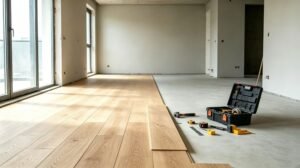
When to Recommend Engineered Hardwood
Based on our experience working with contractors and project buyers, engineered wood is the clear choice in these scenarios:
Anywhere moisture is a concern. Basements, kitchens, bathrooms, coastal homes, and humid climates. Engineered wood’s cross-ply construction resists swelling, cupping, and warping that would damage solid wood within a single season. For contractors, this means fewer callbacks and warranty claims.
Concrete slab construction. You can’t nail solid hardwood to concrete. Engineered wood can be glued down directly or floated over slab, making it the only practical choice for high-rise apartments and modern construction.
Underfloor heating projects. Solid wood is generally incompatible with radiant heat. Engineered wood performs reliably over these systems.
Wide plank installations. Wider planks (6 to 10+ inches) are structurally stable with engineered construction. Solid wood in those widths often cups and gaps.
Budget-conscious projects. Engineered wood typically costs 20 to 30% less than solid hardwood of similar species and finish, with faster installation reducing labor costs.
Large-scale installations. For multi-story buildings, hotel corridors, and apartment complexes, engineered wood offers consistent color, thickness, and finish across bulk orders — something solid wood often struggles with due to natural variation.
Tight project deadlines. Prefinished engineered wood eliminates on-site sanding and finishing, cutting installation time significantly and helping you meet tight schedules.
When Solid Hardwood Still Makes Sense
To be fair, solid hardwood still has its place in certain projects.
Historic renovations where authenticity matters. High-end custom homes with strict climate control and a buyer who insists on “solid.” Projects where unlimited refinishing is a genuine requirement. Dry climates with relative humidity consistently between 35% and 55%.
But even in these cases — and here’s the manufacturer’s honest take — the visual difference is negligible. What you’re really paying for with solid wood is the ability to refinish the floor more times over its lifespan.
The Veneer Thickness Rule
This single specification makes or breaks an engineered floor — and it’s what separates premium product lines from cheaper alternatives.
2mm or less: Surface recoat only, no sanding. Best for rental properties and budget projects.
3mm veneer: One full refinish. Standard residential grade with a 15 to 25 year lifespan.
4mm to 6mm veneer: Two to four full refinishes. Premium residential, active households, and commercial spaces. Approaches the lifespan and refinishing potential of solid wood.
For contractors pitching engineered wood to clients concerned about longevity, spec a 4mm+ veneer. It provides refinishing options without the cost and instability of solid wood.
What This Means for Your Business
From a contractor’s perspective, engineered wood offers clear advantages:
Lower cost per square foot means more competitive bids. Faster installation means you can take on more projects. Fewer callbacks means better reputation and fewer headaches. Flexible installation methods mean you can handle more job site conditions.
Engineered wood is not a compromise — it’s often the smarter, more practical choice for modern projects.
The Contractor’s Honest Take
Here’s what we hear from contractors who’ve installed both:
“I used to push solid hardwood because that’s what clients asked for. But after years of dealing with callbacks on cupped floors and seasonal gaps, I now lead with engineered wood. The clients get the same look, I get fewer headaches, and everyone wins on budget.”
Final Recommendation
For most residential and commercial projects today, engineered hardwood is the more practical choice.
You get the same beautiful real wood surface. Better stability and moisture resistance. More installation flexibility. Lower material and labor costs. And durability to last 25 to 50 years — with premium options approaching solid wood’s lifespan.
Solid hardwood remains the gold standard for longevity and refinishing, but it also comes with higher costs, more installation constraints, and greater environmental sensitivity.
The smart contractor recommends engineered wood for most projects, and solid wood only when the project truly demands it.
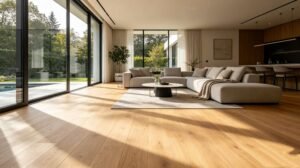
Ready to spec engineered wood for your next project? We offer premium engineered flooring with 3mm, 4mm, and 5mm veneer options — factory-direct at competitive B2B pricing.
📩 Contact us for catalog, samples, and trade pricing.