The Question Every Pet Owner Asks
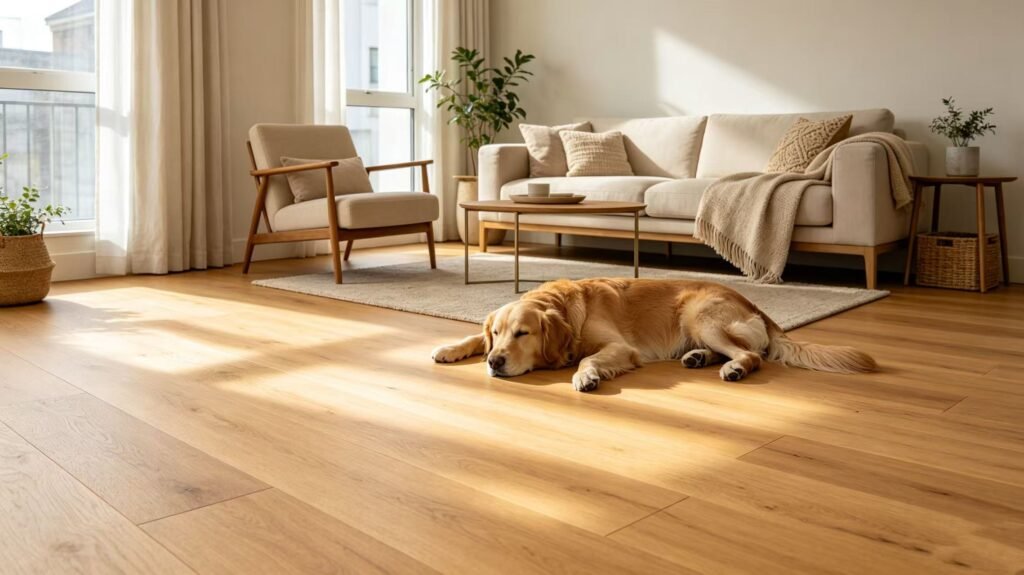
You love your dog. You love hardwood floors. But you’ve been told you can’t have both.
The truth is, you can. And engineered hardwood flooring is the reason why.
As a manufacturer of engineered wood flooring, we’ve spent years perfecting products that stand up to claws, spills, and daily chaos — without sacrificing the beauty of real wood. Here’s what you need to know.
Why Traditional Hardwood Fails with Pets
Traditional solid hardwood has two major weaknesses when it comes to pets:
Scratches. Dog nails are essentially tiny claws. Over time, they’ll scratch and gouge softer wood surfaces. And while you can refinish solid hardwood, that’s a time-consuming and expensive process.
Water damage. A spilled water bowl, a muddy paw, or a toilet accident can cause solid wood to warp, cup, and stain. If urine sits on a solid hardwood floor for any length of time, it can eat through the finish and permanently damage the wood.
This is why many pet owners have historically avoided hardwood altogether, opting for tile, luxury vinyl, or laminate.
But engineered hardwood changes the equation entirely.
Why Engineered Hardwood Is Different
Engineered hardwood uses a real wood surface (the “veneer” or “wear layer”) bonded to a multi-layer plywood core. This cross-layered construction creates a floor that’s:
More stable. The layered core resists expansion and contraction with humidity changes, making it far less likely to warp or cup.
More moisture-resistant. Engineered hardwood is designed to handle spills and humidity that would damage solid wood. Premium products even offer waterproof protection.
Scratch-resistant. Hardwood species like oak are already naturally hard — and some engineered floors use densified wood technology to make them even harder, sometimes reaching a Janka hardness rating of 3000+ (compared to standard oak’s 1360).
Safe for families and pets. Many engineered wood floors use formaldehyde-free adhesives and meet strict indoor air quality standards like CARB2 and MAS Green certification.
What to Look for in Pet-Friendly Engineered Wood Flooring
Based on what we know from working with contractors and pet-owning homeowners, here’s what matters most.
1. Look for a Thick Wear Layer (4mm or More)
The wear layer is the real wood surface on top. A thicker wear layer means you can refinish the floor more times if needed — and it provides more durability against wear and tear.
2mm or less: Light household use only. Not ideal for pets.
3mm: Moderate pet use. One full refinish over lifespan.
4mm or more: Heavy pet use. Multiple refinishes available — approaches solid wood durability.
Some premium pet-friendly engineered floors feature densified wood technology that’s 4X more scratch-resistant and 6X more dent-resistant than typical hardwood.
2. Look for Waterproof or Water-Resistant Construction
This is the biggest advantage engineered wood has over solid. Some engineered floors now offer waterproof protection, meaning spills and pet accidents won’t damage the floor.
Water-resistant floors can handle small spills if cleaned up quickly.
Waterproof floors can withstand standing water for hours or even days without damage.
For pet households, waterproof is the safer choice.
3. Choose the Right Finish
Matte or satin finish: Better at hiding scratches and pet hair. High-gloss finishes show every imperfection.
Aluminum oxide or urethane coating: Adds an extra layer of scratch protection and makes cleaning easier.
Wire-brushed or distressed surface: The subtle texture helps camouflage light scratches and wear.
4. Pick Harder Wood Species
If you’re choosing a wood species, go with naturally harder woods:
Oak: 1360 Janka rating — excellent durability
Hickory: 1880 Janka rating — even harder
Maple: 1450 Janka rating — solid choice
Avoid softer woods like pine, birch, or cherry — they’ll scratch more easily.
5. Look for Antimicrobial Protection
Some pet-friendly engineered floors include antimicrobial coating technology that inhibits the growth of bacteria that can cause odor, mold, and mildew. This is especially useful if you can’t get to a pet accident immediately.
Installation & Maintenance Tips for Pet Homes
Once you’ve selected the right engineered floor, proper installation and maintenance will extend its life:
Install properly. Ensure the subfloor is clean, dry, and level. Professional installation is recommended — a poorly installed floor is more vulnerable to moisture and movement.
Trim nails regularly. This is the simplest way to prevent scratches. Also consider nail caps or booties for extra protection.
Use rugs in high-traffic areas. Place washable rugs near entrances, food bowls, and play areas to reduce wear.
Clean up spills immediately. Don’t give moisture a chance to seep into the floor, even if it’s waterproof.
Choose your color wisely. Medium-tone floors in warm honey browns or soft driftwood greys hide pet hair and scratches better than dark or light floors. Distressed or hand-scraped finishes also help camouflage wear.
The Bottom Line
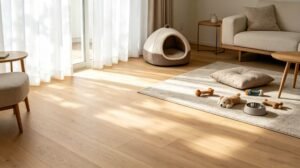
Engineered hardwood flooring is the best option for pet owners who want real wood floors.
You get the beauty and character of authentic wood. Superior stability and moisture resistance. High scratch and dent resistance — especially with densified wood options. The ability to refinish (with a thick enough wear layer). And a safe, low-VOC surface for your family.
Don’t let your dog stop you from having the floor you want. The technology exists. The products exist. And they work.
Ready to get engineered wood flooring for a pet-friendly home? We offer premium engineered hardwood with 3mm, 4mm, and 5mm veneer options — built to handle dogs, kids, and daily life.
📩 Contact us for catalog, samples, and expert advice.