A complete guide to understanding the environmental performance of different wood flooring types
When it comes to wood flooring, “eco-friendly” means different things to different people. Some focus on formaldehyde emissions. Others care about sustainable sourcing. And many just want to know which option is safest for their family.
The truth is, wood flooring exists on a spectrum when it comes to environmental performance. At one end, you have budget options that prioritize cost over everything else. At the other, you have premium floors built with the highest environmental standards.
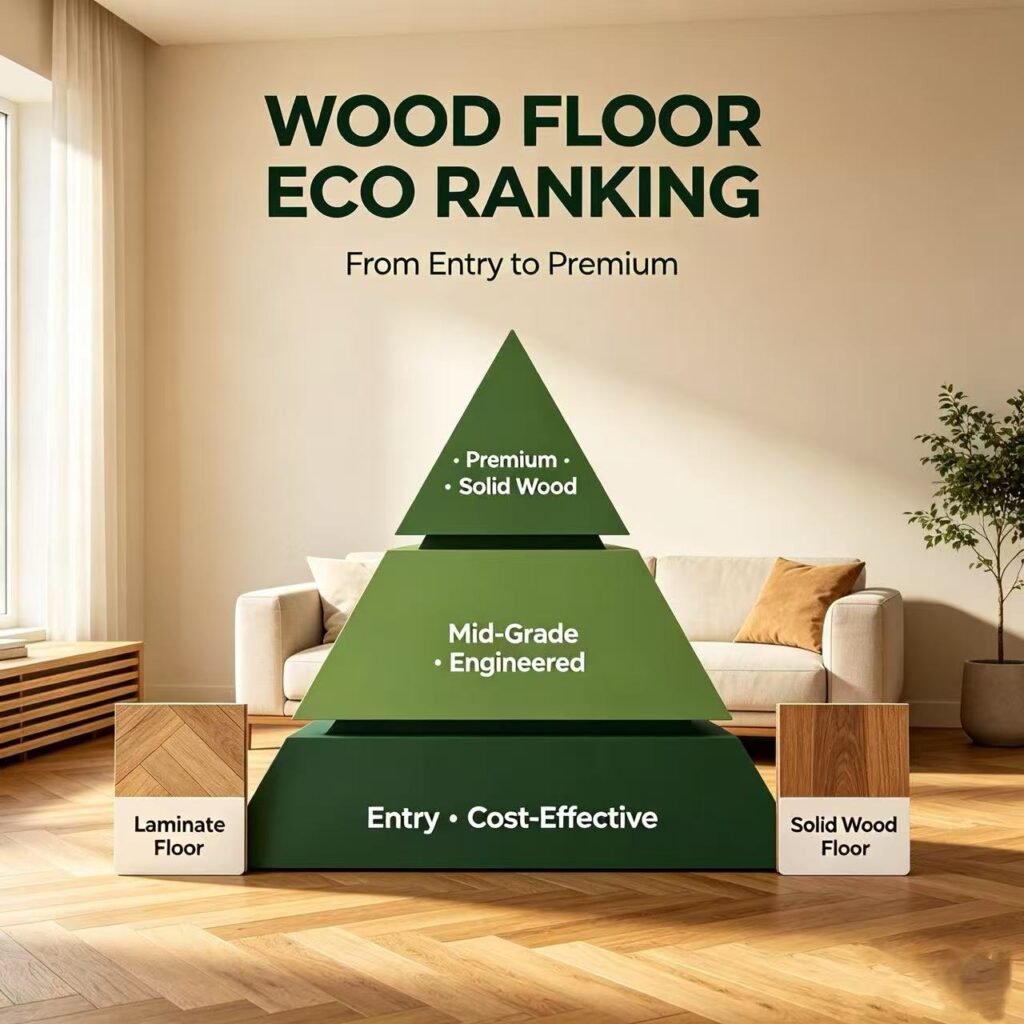
This guide ranks wood flooring types from “basic” to “premium” based on their environmental performance — so you know exactly what you’re getting at each level.
The Bottom Tier: Budget Options
Cheap Laminate Flooring
Laminate flooring at the entry level is often the least environmentally friendly option. It’s made from wood fibers and resin, pressed together at high pressure. The core is typically high-density fiberboard (HDF) made from recycled wood fibers.
Environmental concerns: The resins used in cheap laminate can contain formaldehyde. While most meet basic safety standards, the overall environmental footprint is higher than natural wood options.
Who it’s for: Rental properties, budget renovations, and spaces where cost is the only consideration.
Inexpensive Multi-Layer Engineered Wood
At the lower end of engineered wood, you’ll find multi-layer products with thin top veneers (0.6-1.2mm) and cores made from fast-growing wood species like poplar or eucalyptus.
Environmental concerns: These products use more adhesive per square meter than premium engineered floors. The glue used in cheaper versions may have higher formaldehyde content.
Who it’s for: Budget-conscious projects where the look of wood is desired but the budget doesn’t allow for premium options.
The Mid Tier: Better Choices
New Three-Layer Engineered Wood
New three-layer engineered wood is a step up from budget multi-layer options. It uses three layers of solid wood cross-laminated together, with a thicker top veneer than entry-level products.
Environmental performance: The three-layer construction uses less adhesive than multi-layer products. The thicker veneer means more natural wood and less glue.
Who it’s for: Homeowners who want a balance between quality and price.
Domestic and Premium Laminate
At the higher end of laminate, you’ll find products from reputable brands that use better-quality resins and stricter production standards. These products often carry environmental certifications.
Environmental performance: Better resins mean lower formaldehyde emissions. However, laminate still relies on synthetic materials and is not biodegradable.
Who it’s for: Projects where durability and cost are priorities, but environmental concerns are also considered.
Low-End Pure Three-Layer Solid Wood
Pure three-layer solid wood is a significant step up from engineered wood in terms of environmental performance. It uses three thick layers of solid wood with minimal adhesive.
Environmental performance: The wood content is high, and adhesive use is low. However, the sourcing of the wood matters — sustainably sourced wood is better than non-certified wood.
Who it’s for: Homeowners who want solid wood quality at a more accessible price point.
The Upper Mid Tier: Quality Choices
Eucalyptus/Eucalyptus Multi-Layer Thick Veneer
This category includes multi-layer engineered wood with thicker top veneers (2-4mm) and cores made from eucalyptus or other fast-growing species.
Environmental performance: The thicker veneer means more natural wood and less glue. Eucalyptus is a fast-growing species, making it a more sustainable choice than slow-growing hardwoods.
Who it’s for: Projects where durability and quality matter, but budget is still a consideration.
Imported Full-Eucalyptus Multi-Layer Engineered Wood
At the higher end of eucalyptus-based products, you’ll find imported options with consistent quality and better environmental standards.
Environmental performance: These products often come with environmental certifications and use better-quality adhesives. The full-eucalyptus construction provides good stability with lower environmental impact.
Who it’s for: Commercial projects and high-end residential where quality and environmental standards matter.
The Top Tier: Premium Environmental Performance
Mid-to-High End Three-Layer Solid Wood
Three-layer solid wood at the premium level uses high-quality face veneers (3-6mm) and sustainable core materials. These products are designed to last decades.
Environmental performance: With minimal adhesive and high wood content, these floors are among the most environmentally friendly options available. The face veneers are thick enough to be refinished multiple times, extending the floor’s lifespan.
Who it’s for: Homeowners who want a floor that will last for generations with minimal environmental impact.
Pure Solid Wood Flooring
At the very top of the environmental ranking is pure solid wood flooring. This is a single piece of solid wood from top to bottom — no glue, no synthetic materials.
Environmental performance: Pure solid wood is the most natural option available. The environmental impact depends entirely on how the wood is sourced. FSC-certified or reclaimed wood is the best choice.
Who it’s for: Those who want the most natural, environmentally friendly floor possible. Solid wood can be refinished many times over its lifespan, making it a sustainable long-term choice.
The Full Ranking
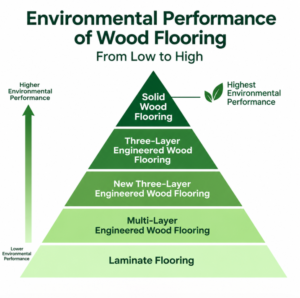
From lowest to highest environmental performance:
Cheap laminate flooring – Lowest environmental performance, highest synthetic content
Inexpensive multi-layer engineered wood – Thin veneer, more adhesive
New three-layer engineered wood – Better balance of wood and adhesive
Domestic and premium laminate – Better resins, but still synthetic
Low-end pure three-layer solid wood – More wood, less glue
Eucalyptus/eucalyptus multi-layer thick veneer – Sustainable species, better quality
Imported full-eucalyptus multi-layer engineered wood – Higher standards, certifications
Mid-to-high end three-layer solid wood – Premium quality, low adhesive
Pure solid wood flooring – Highest environmental performance, zero adhesive
What This Means for Your Project
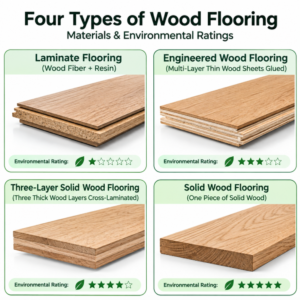
The environmental performance of wood flooring isn’t binary. It exists on a spectrum from basic laminate at the bottom to pure solid wood at the top.
If your priority is environmental performance: Choose mid-to-high end three-layer solid wood or pure solid wood with sustainable sourcing certification.
If you need a balance of quality and price: New three-layer engineered wood or eucalyptus multi-layer with thick veneer offer good environmental performance at a reasonable price.
If budget is the only consideration: Understand that you’re trading environmental performance for cost — and that’s okay as long as you know what you’re getting.
The most important factor: Regardless of which tier you choose, the environmental impact of your floor is ultimately determined by how long it lasts. A floor that lasts 50 years is more environmentally friendly than a floor that lasts 10 years, regardless of the materials used.
Ready to find the right engineered wood flooring for your project? We offer a wide range of engineered wood products at different price points — factory-direct at competitive prices.
📩 Contact us for catalog and samples.