Engineered wood and SPC are two of the most popular flooring choices today. This article helps you make an informed decision by comparing them across materials, performance, cost, and application scenarios.
Whether you’re planning a new home build, a renovation, or selecting flooring for a commercial project, engineered wood and SPC (Stone Plastic Composite) are likely on your shortlist. Both offer excellent stability and aesthetics, but they differ fundamentally in material composition, feel, durability, and ideal use cases.
1.Material & Construction: Real Wood vs. Composite Technology
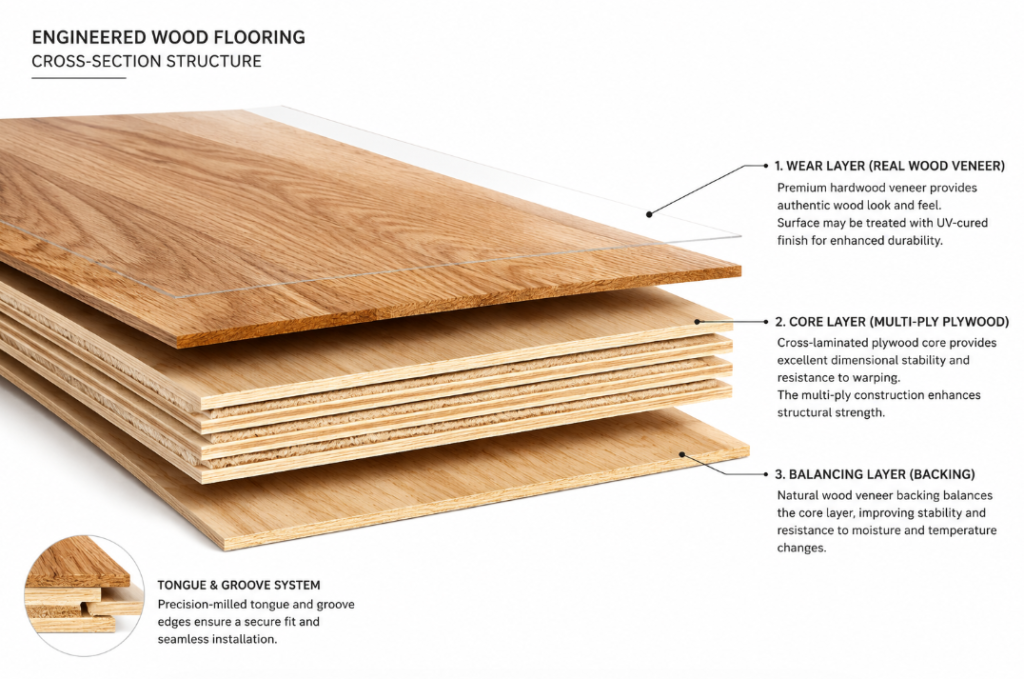
Engineered wood features a real wood veneer on top (typically oak, walnut, or other species), bonded to a multi-ply plywood or softwood core in a cross-layered construction. This structure retains the natural grain, color, and warmth of real wood while offering greater stability than solid hardwood.
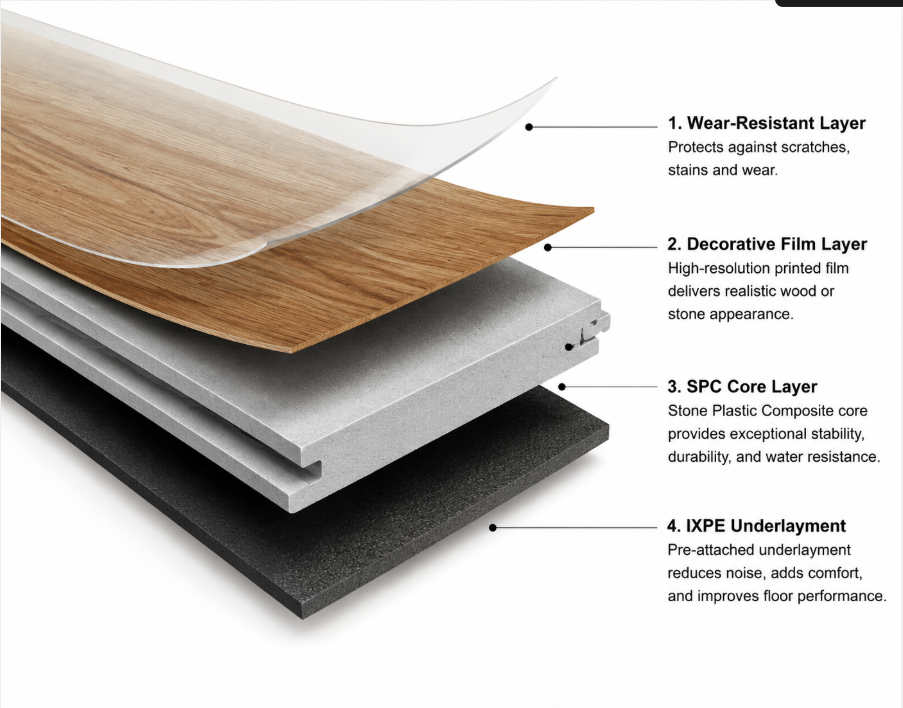
SPC flooring is made from a composite core of limestone powder and PVC, with a high-definition printed decorative layer and a wear layer on top. It is completely waterproof, and while it can closely mimic the look of wood or stone, the texture and feel are still noticeably different from natural timber.
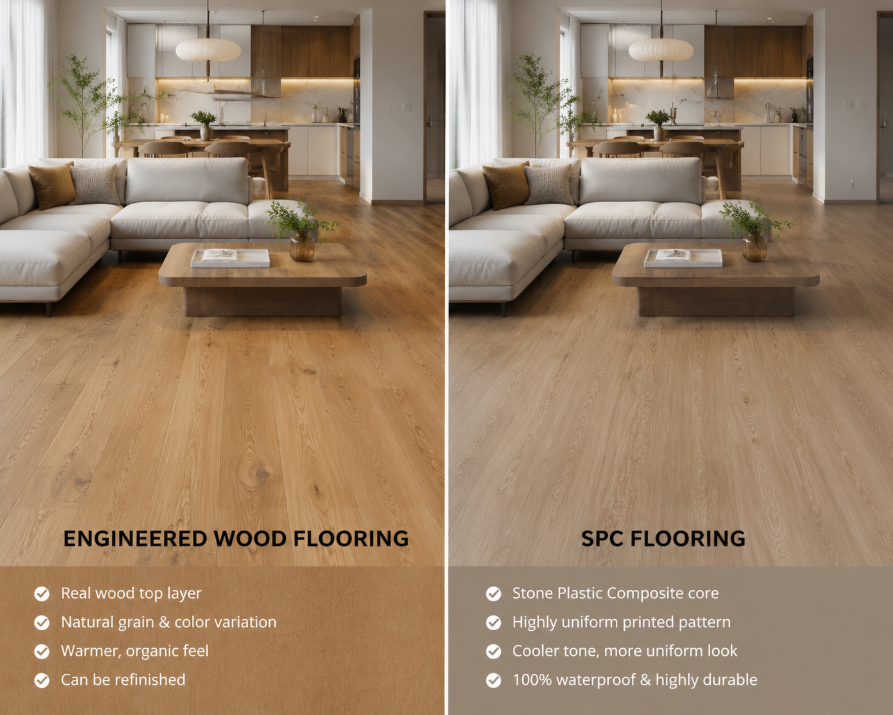
2.Appearance & Texture: Natural Character vs. High-Fidelity Reproduction
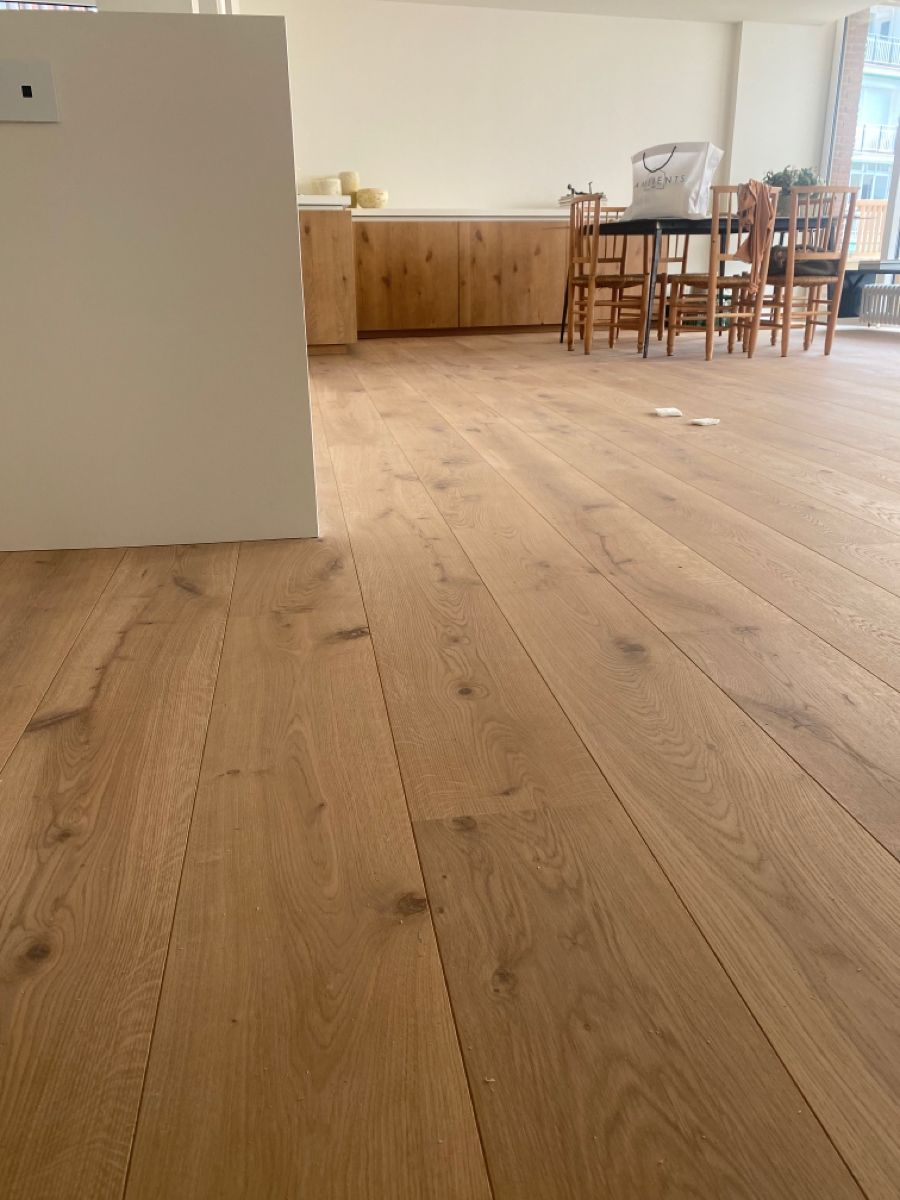
Every engineered wood plank is unique, with natural grain variation and color differences, and a subtle textured surface that reflects the wood’s pores. Over time, it develops a rich patina that many value as part of its natural beauty.
SPC printing technology has advanced significantly and can achieve highly realistic wood visuals. However, because it’s a printed layer, patterns repeat at regular intervals and lack the natural variation found in real wood.
3.Durability & Water Resistance
Engineered wood is strong and dimensionally stable, but can still be damaged by prolonged exposure to water or extreme humidity. It is best suited for living rooms, bedrooms, and other dry areas.
SPC’s key selling point is 100% waterproofing and excellent resistance to scratches and dents. It is virtually unaffected by humidity changes, making it the ideal choice for kitchens, bathrooms, basements, and other moisture-prone areas.
4.Maintenance & Lifespan
Engineered wood requires proper care using dedicated wood floor cleaners and avoiding excessive moisture. If the top veneer is thick enough (typically 2mm or more), it can be sanded and refinished in the future, significantly extending its lifespan.
SPC requires very simple maintenance – regular sweeping and occasional damp mopping. It doesn’t need waxing or oiling, but once the wear layer is worn through, the entire floor needs replacement and cannot be refinished.
5.Installation & Subfloor Requirements
SPC typically uses a floating click-lock installation system, which is fast and relatively forgiving on subfloor flatness. It’s a preferred choice for DIY projects or tight timelines.
Engineered wood offers more installation options (floating, glue-down, nail-down), but requires stricter subfloor flatness and moisture content standards, with higher installation difficulty and cost.
6.Cost & Long-Term Value
SPC generally has lower initial material and installation costs. It’s a great choice if you need a budget-friendly, easy-maintenance floor.
Engineered wood has a higher upfront cost, but its refinishable nature gives it a lifespan that can far exceed SPC. More importantly, real wood floors have long been considered a value-adding feature for property appreciation, making them a worthwhile investment for long-term homeowners or those considering future resale.
In summary, the choice between engineered wood and SPC comes down to your project priorities.
If you’re working with a tighter budget and need a floor that can handle moisture, heavy foot traffic, and requires minimal maintenance, SPC is the more practical choice. It’s particularly well-suited for kitchens, bathrooms, basements, and rental properties where durability and ease of care matter more than natural material authenticity.
On the other hand, if you’re looking for a floor that adds warmth, character, and long-term value to a home, engineered wood is worth the higher upfront investment. Its natural wood surface can be sanded and refinished over time, which means it can last for decades. This makes it a preferred choice for living rooms, bedrooms, and spaces where homeowners plan to stay long-term and value the timeless appeal of real wood.
Choose engineered wood if: you value the natural beauty and texture of real wood, plan to stay in your home for years, and are willing to pay a premium for the ability to refinish.
Choose SPC if: you need a waterproof, durable, low-maintenance floor for rental properties, moisture-prone spaces, or budget-conscious projects.