The global engineered wood flooring market is projected to reach $59.6 billion in 2026, growing at a 6.5% CAGR. Understanding regional market dynamics and design trends will be key for B2B buyers to capture opportunities in North America and Asia-Pacific.
In 2026, the global engineered wood flooring market is no longer just about pricing and specifications. Design trends and regional demand patterns are reshaping B2B procurement decisions. Understanding these shifts is essential for manufacturers and buyers to stay ahead.
1.Market Size: Growth Is Certain, but the Structure Is Shifting
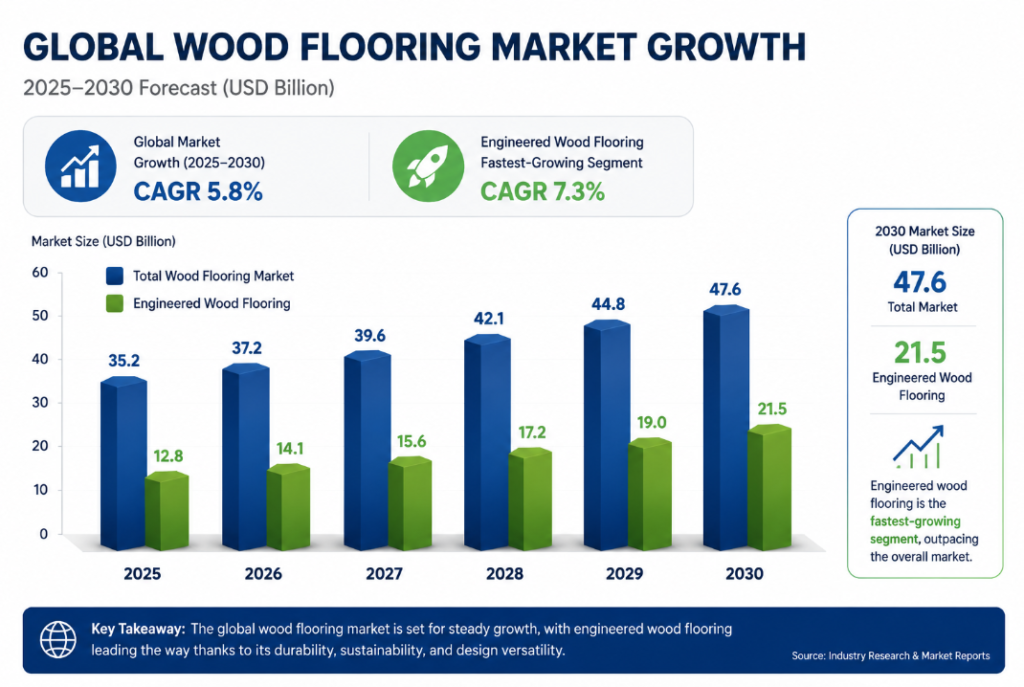
The global wood flooring market is projected to grow from $55.9 billion in 2025 to $59.6 billion in 2026, with a 6.2% CAGR reaching $75.7 billion by 2030. Within this, engineered wood flooring continues to gain share, accounting for 53.37% of the wood flooring market in 2025. The Asia-Pacific region is expected to lead growth with a 5.48% CAGR.
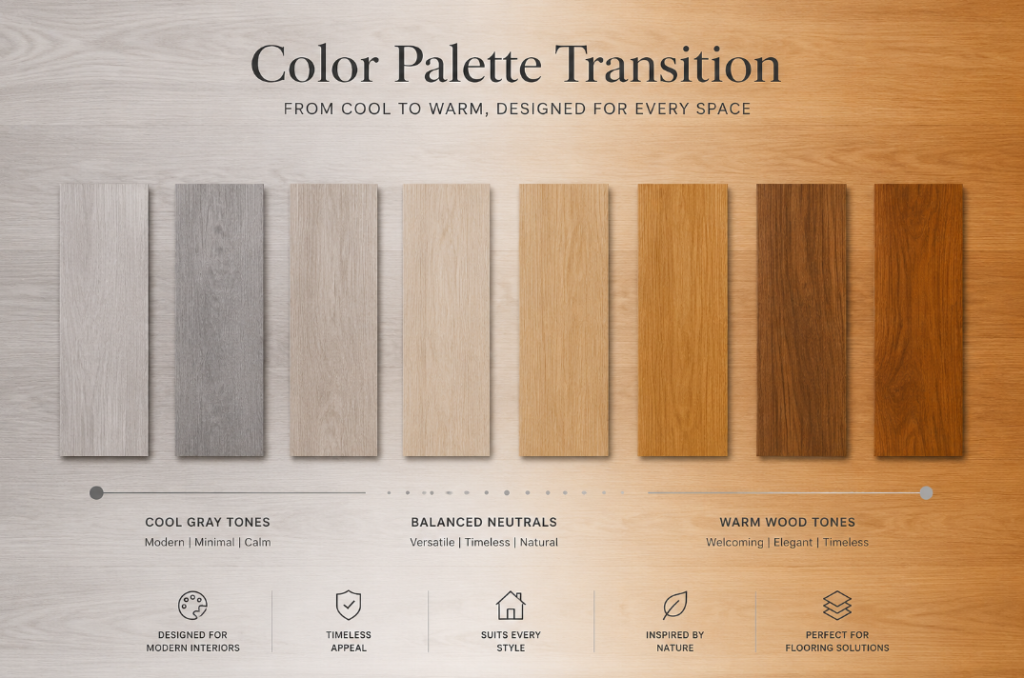
2.Color Trends: Shifting from “Cool Gray” to “Warm Tones”
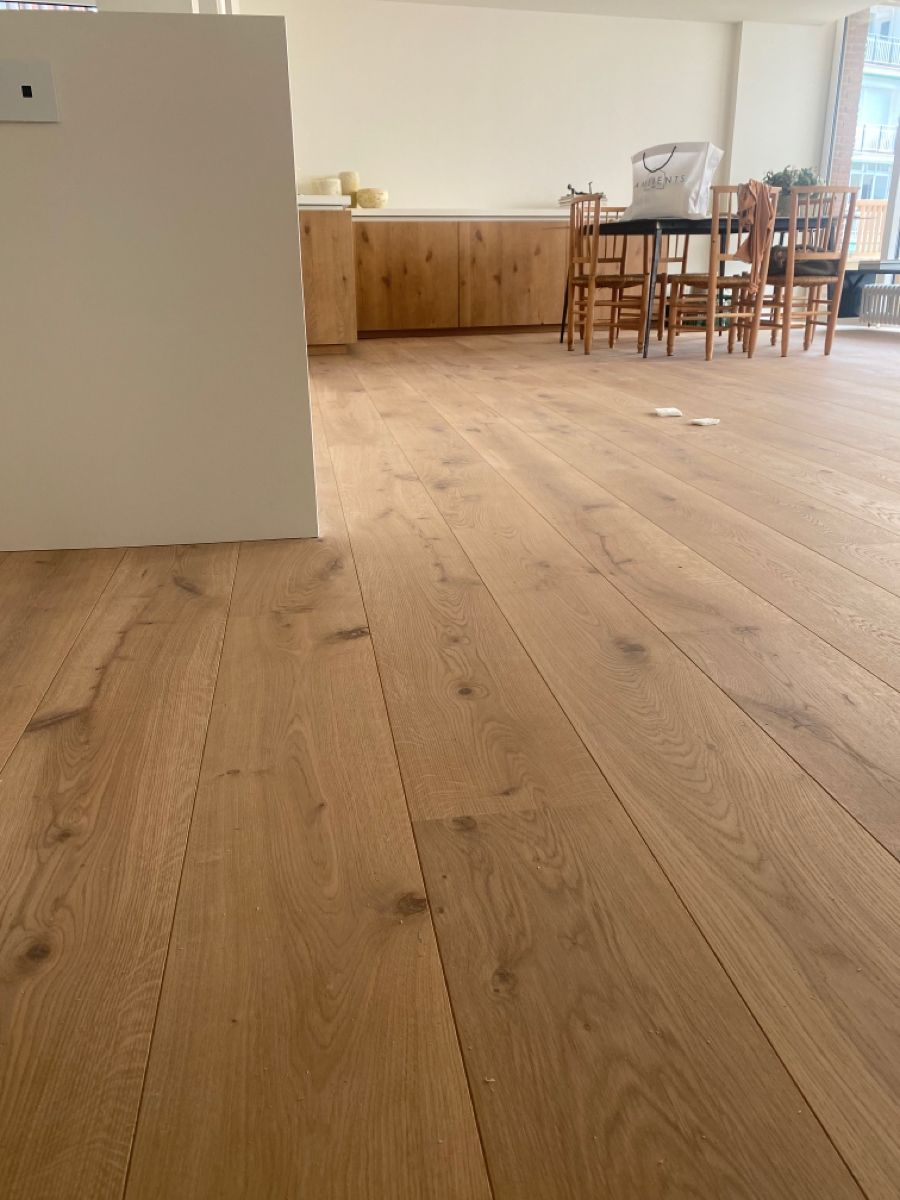
The keyword for 2026 is warmth. Warm tones like oak, walnut, and caramel amber are replacing the gray palettes that dominated interior design in recent years. Buyers are looking for honey oak, caramel, and amber wood tones, as well as beige and golden mid-tones that balance warmth. Visible wood grain, knots, and hand-scraped effects – “natural imperfections” – are becoming mainstream rather than flaws to be hidden.
3.Regional Divergence and Sourcing Opportunities
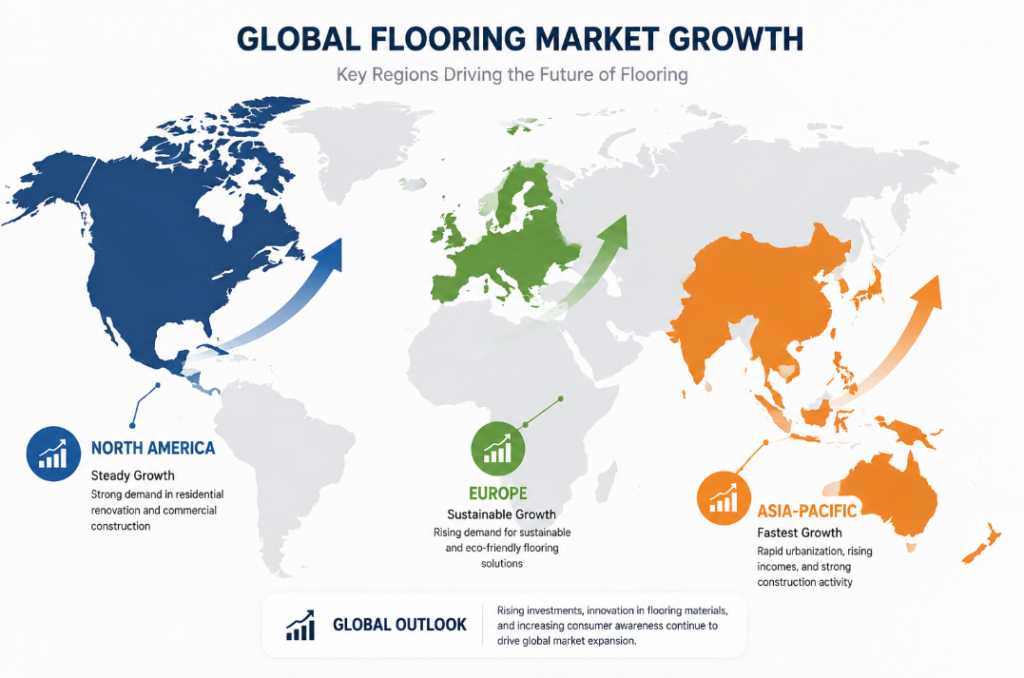
North America: Held 31.38% of global market share in 2025, driven by 1.307 million housing starts in 2025 supporting stable demand. Distributor confidence in 2026 is higher than retailer confidence, indicating B2B project procurement as the core driver.
Asia-Pacific: Expected to record the highest CAGR at 5.48%. Japan’s assembled wood flooring imports grew over 30% month-on-month and approximately 25% year-on-year in November 2024. Luxury apartment construction in India and Southeast Asia is offsetting weaker residential demand in China.
Europe: European parquet production contracted to 51.5 million sqm in 2024, with oak accounting for 83.8% of species used and multi-layer construction dominating.
4.Key Takeaways for B2B Buyers
For buyers, 2026 procurement decisions should focus on:
Technical Specifications: Engineered wood’s 53.37% market share and floating installation’s 5.33% highest CAGR indicate the market is shifting rapidly toward pre-finished, easy-to-install engineered wood products.
Supply Chain Flexibility: With US hardwood production down 29% and ongoing tariff changes, manufacturers with diversified supply chains will be the most reliable partners.
2026 marks a turning point for the engineered wood flooring market. Design preferences are shifting back to warmth, regional markets are diverging, and supply chain resilience is becoming a competitive advantage. For B2B buyers, understanding these trends will be essential for making informed sourcing decisions in the year ahead.