A Complete Guide from Safety, Comfort, Durability, Budget, and Installation Perspectives
Choosing the right flooring for a multi-generational home is about more than just aesthetics. When you have children learning to walk and elderly family members who need extra care, every detail matters — from how the floor feels underfoot to how it protects against falls and how easy it is to maintain.
This guide walks you through five key dimensions to help you make the best choice for your family.
1. Safety First: Slip Resistance and Fall Protection
For families with young children and seniors, slip resistance is the most critical factor. Unlike smooth ceramic tiles, wood flooring provides a naturally higher friction surface, making slips and falls less likely.
What to look for:
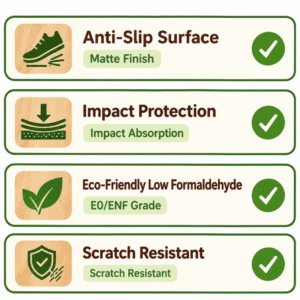
Matte or textured surfaces: Floors with a satin or matte finish offer more grip than high-gloss options.
Wood’s natural cushioning: Even if a fall happens, wood’s natural elasticity absorbs impact better than stone or tile, reducing the risk of serious injury.
Quick Tip: Avoid glossy, high-polish finishes in high-traffic areas like hallways and living rooms.
2. Comfort Underfoot: Warmth and Cushioning
Wood flooring is naturally warmer and softer than tile or stone. For barefoot toddlers and seniors who may spend more time at home, this makes a significant difference in daily comfort.
What to look for:
Solid hardwood offers the most natural warmth and a slightly resilient feel, making it gentle on joints.
Engineered wood with thicker top layers also provides good cushioning and thermal insulation.
Quick Tip: If you have underfloor heating, engineered wood with a plywood core is more stable and won’t warp under temperature changes.
3. Durability: Resistance to Scratches and Wear
Children love to drag toys, drop things, and run around. Elderly family members may use walkers or canes. Your floor needs to withstand daily wear without showing damage quickly.
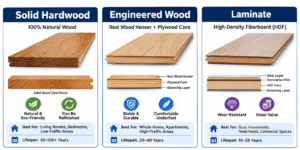
Engineered Wood with a thick veneer provides good scratch resistance, suitable for living rooms and bedrooms. With a 3-4mm top layer, it can be sanded and refinished if damaged.
Solid Hardwood has moderate scratch resistance but offers the advantage of being refinishable multiple times over its lifetime, making it a good choice for bedrooms and formal areas.
What to look for:
Engineered wood with a 3-4mm top veneer can be sanded and refinished if damaged.
Multi-layer engineered wood has better dimensional stability and resists warping.
Quick Tip: For homes with pets and children, high-quality engineered wood often outperforms solid hardwood in daily durability.
4. Health and Air Quality: Low VOC and Hypoallergenic
Children breathe closer to the floor, and seniors often have more sensitive respiratory systems. Formaldehyde emissions from flooring adhesives and materials should be a primary concern.
What to look for:
E0 or ENF grade certifications indicate very low formaldehyde levels.
Solid hardwood generally has the lowest VOC emissions since it uses minimal glue.
High-quality engineered wood with low-emission adhesives can also meet strict safety standards.
Quick Tip: Always ask for the latest test report from the manufacturer. Look for CARB or TSCA compliance for U.S. markets.
5. Budget and Long-Term Value
Balancing upfront costs with long-term maintenance is key.
Engineered wood offers a good balance of cost and longevity — you get the look of wood without the high price tag of solid hardwood. It requires moderate maintenance and can last 30-50 years.
Solid hardwood is a high-cost, long-term investment. While expensive upfront, it requires high maintenance including periodic refinishing, but can last 50 years or more with proper care.
What to consider:
If you want a balance of quality and cost, engineered wood is your best bet.
If longevity and the ability to refinish matter most, invest in solid hardwood.
Quick Tip:
If budget allows, invest in a thicker wear layer (3-4mm) for engineered wood or choose solid hardwood for rooms where longevity matters most.
Summary: How to Decide
If your priority is maximum safety and cushioning, choose solid hardwood.
If your priority is a balance of comfort, stability, and cost, choose engineered wood with a 3-4mm veneer.
If your priority is the lowest health risk , choose solid hardwood or engineered wood.
If your priority is the most affordable family-friendly option, choose engineered wood with a good balance of quality and price.
Every family’s needs are different. Think about how your household lives day to day, then match those habits to the material that fits best. A floor is a long-term commitment — choose one that will keep your family safe, comfortable, and happy for years to come.