A practical guide to making sure the floor you order is the floor you actually get
You found the perfect floor online. The color looks exactly right. The grain is beautiful. You order it, it arrives, and… it’s completely different.
The color is off. The tone is wrong. What looked warm and natural on your screen now looks cold and grey in your home.
This is one of the most common frustrations of buying flooring online — and it’s also one of the easiest to avoid. Here’s how.
Why Color Looks Different Online
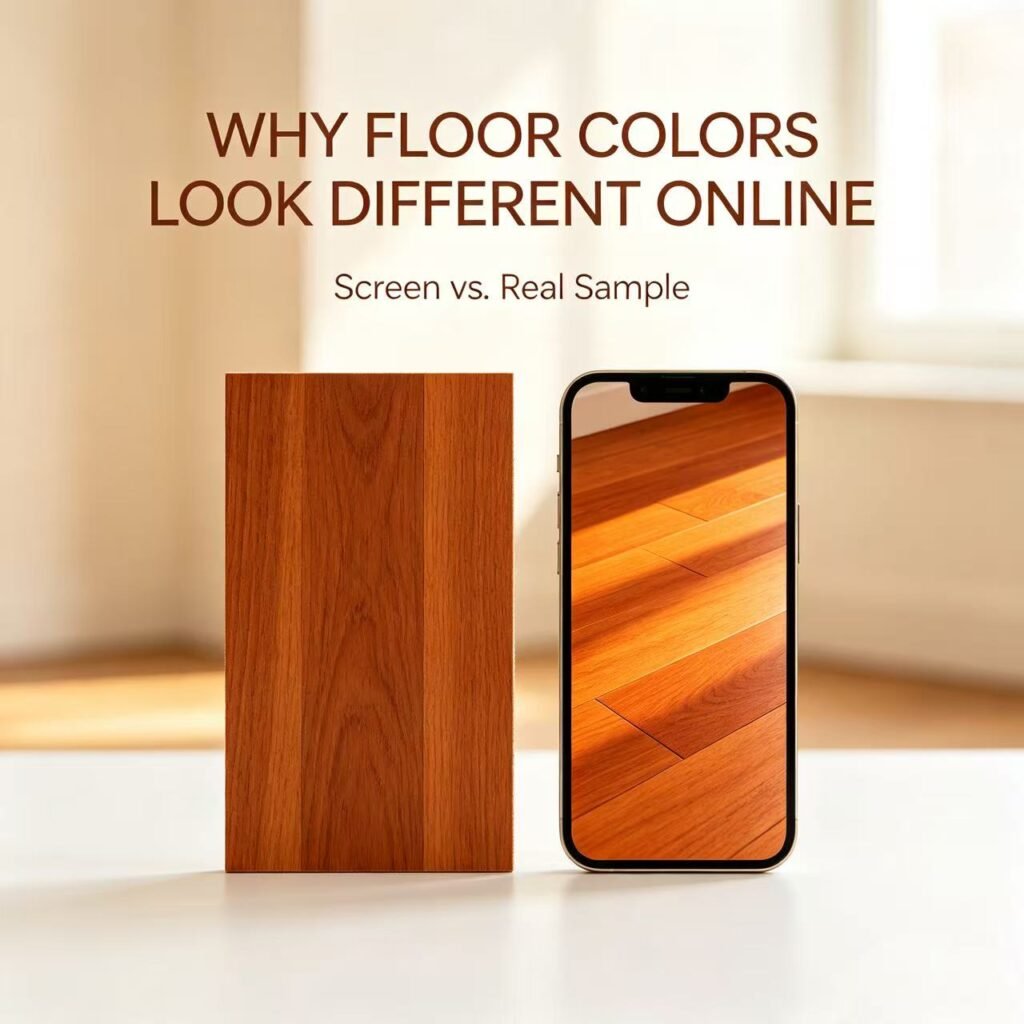
The short answer: your screen lies.
Every screen — phone, tablet, laptop, monitor — displays color differently. The same floor can look warm on one screen and cool on another. Add in the fact that most product photos are shot under professional studio lighting, which is designed to make everything look its absolute best. Your home lighting is not a studio.
The bottom line: Never trust the color on your screen. It’s a reference, not a promise.
The Golden Rule: Always Request a Sample
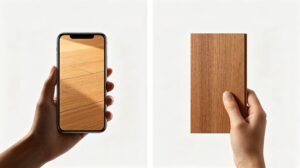
Before you order anything, get a physical sample in your hands. This is the single most important step in avoiding color disappointment.
A physical sample allows you to:
See the true color in your actual space
Check the texture and finish in person
Test how it looks at different times of day
Compare it with your furniture and wall colors
Most reputable suppliers offer samples, often free or at a small cost. It’s a small investment that saves you from a much bigger regret.
How to Evaluate a Sample Properly
Step 1: Look at It in Your Space
Bring the sample into the room where it will be installed. Place it on the floor, against the wall, and next to your furniture. Walk around it. Look at it from different angles.
Don’t just hold it in your hand. Put it where it will actually go.
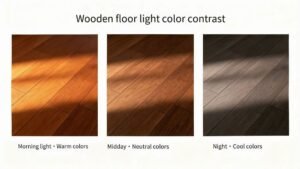
Step 2: Check It at Different Times of Day
A color that looks perfect in the morning sun might look completely different in the afternoon or under artificial light.
Check your sample at all times:
Morning (natural daylight)
Midday (bright, direct light)
Afternoon (changing light)
Evening (artificial light)
The color that works consistently across all lighting conditions is the one you’ll be happiest with.
Step 3: Avoid Two Common Mistakes
Don’t look at it only at night. Artificial light can dramatically change how a color appears. A floor that looks great under your living room lights might look dull and lifeless in natural daylight.
Don’t look at it only in natural light. If you spend a lot of time in the room in the evening, you need to see how it looks then too. Check it under your actual room lighting — not just in the store or under sunlight.
Ask for a “Production Sample”
Here’s something many people don’t know: the sample you receive may not be a perfect match for the final product.
Different batches of flooring can have slight color variations. This is normal in wood flooring — every tree is different, and every batch has its own natural variation.
What to do: Ask your supplier for a “production sample” or “bulk sample.” This is a piece taken from the actual batch you’ll be ordering, not just a general stock sample. It gives you a much more accurate idea of what you’ll actually receive.
Understand Wood Grade and Veneer
Color isn’t just about the stain. It’s also about the wood itself.
Wood grade matters. A higher grade (AB grade) means more consistent color and fewer natural variations. A lower grade (CD grade) will have more color variation, knots, and natural character.
Veneer thickness matters too. The thickness of the top wood layer affects how the color absorbs and reflects light. A thicker veneer (3-4mm) will show more natural wood character, while a thinner veneer (1.2mm) will have a more uniform appearance.
If you have specific color expectations, discuss the grade and veneer with your supplier upfront. It’s easier to set expectations before ordering than to fix disappointment after delivery.
Compare Sample, Bulk, and Reality
The safest approach is a three-step process:
1. Start with a sample. Get a small piece to see if you like the general color and style. This is the low-cost first step.
2. Request a production sample. Once you’ve decided on the style, ask for a sample from the actual batch you’ll be ordering. This confirms the color before the full order is made.
3. Request a final confirmation. Before the order ships, ask for photos of the actual batch (or a video) to confirm the color one more time.
If the supplier’s process doesn’t include a production sample, and you’re concerned about color accuracy, consider ordering a small trial batch (like 20-30sqm) before committing to a larger quantity. This is especially important for large projects where color consistency is critical.
What to Do If It’s Already Wrong
If you’ve already received your flooring and the color is wrong — don’t panic. There are options:
If the color is still within an acceptable range: Wood is a natural material, and some variation is expected. Sometimes the color will grow on you after installation. If it’s close enough, consider going ahead — it might look better than you think once installed.
If it’s a batch variation issue: Contact your supplier. Most reputable suppliers will try to work with you on a solution, especially if you have clear communication records about your color expectations.
If it’s simply not what you ordered: If the color is significantly different from what was promised, request a replacement or refund. This is easier if you’ve documented the color expectations clearly upfront.
Summary: The Smart Buyer’s Checklist
Always request a physical sample before ordering
View the sample in your actual space, at different times of day
Ask for a production sample from the batch you’re ordering
Confirm wood grade and veneer thickness before ordering
Communicate your color expectations clearly with the supplier
Consider a small trial order for large projects
Ready to order with confidence? We offer production samples from actual batches, and we’re happy to guide you through the color selection process — factory-direct at competitive prices.
📩 Contact us for catalog and samples.