How to pick floor and furniture colors that work together — without the regrets
You’ve chosen your flooring. You’ve picked your furniture. But when they come together in the same room, something feels off.
The floor looks good on its own. The furniture looks good on its own. But together, they clash.
This is one of the most common design mistakes — and it’s also one of the easiest to fix. Here’s a practical guide to matching flooring and furniture colors so your space looks intentional, not accidental.
The Golden Rule: Start with the Floor
The floor is the largest surface in any room. It sets the foundation for everything else. Once the floor is down, it’s expensive and difficult to change. Furniture, on the other hand, is easier to swap or update.
The smart approach: Choose your floor color first, then build your furniture and decor around it.
This doesn’t mean your floor dictates everything. It means you should have a clear idea of your floor color before you commit to furniture purchases.
Three Color Strategies That Work
Strategy 1: Light Floor + Dark Furniture (High Contrast)
A light floor (natural oak, pale grey, white-washed timber) paired with darker furniture (walnut, espresso, charcoal) creates a clean, crisp contrast.
Why it works: The dark furniture anchors the space, while the light floor keeps the room feeling open and airy. This is a classic combination that works in almost any style — modern, traditional, or transitional.
Best for: Living rooms, bedrooms, and spaces where you want a balanced, timeless look.
Risk: Very low. This is one of the safest and most reliable combinations.
Strategy 2: Dark Floor + Light Furniture (Bold Contrast)
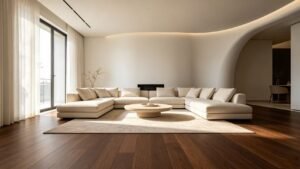
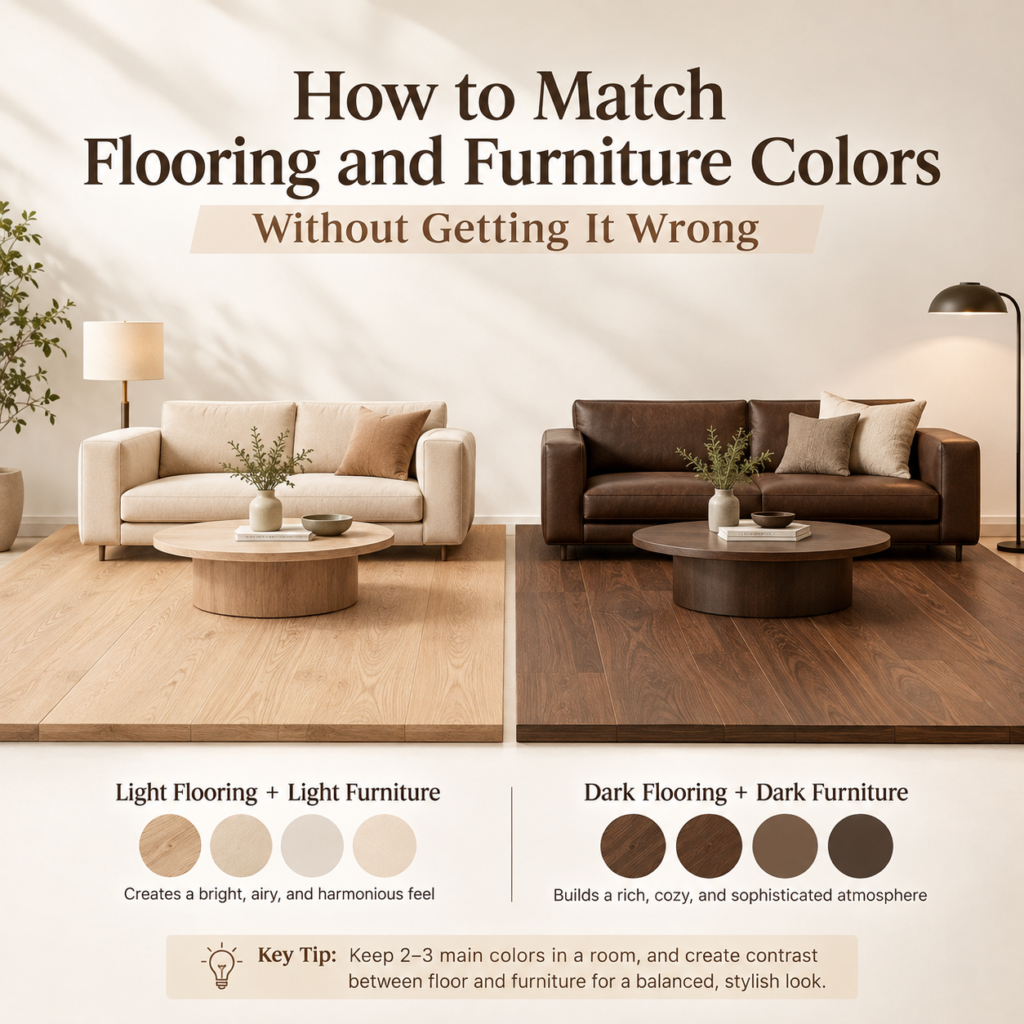
A dark floor (walnut, espresso, smoked oak) paired with lighter furniture (cream, beige, light wood tones) creates a dramatic, sophisticated contrast.
Why it works: The dark floor adds depth and richness, while the light furniture prevents the room from feeling too heavy or closed in. This combination works particularly well in large, light-filled spaces.
Best for: Large rooms with good natural light, formal dining rooms, and spaces where you want a premium feel.
Risk: Dark floors show dust and scratches more easily, so this requires a willingness to maintain the floor more regularly.
Strategy 3: Light Floor + Light Furniture (Soft Monochrome)
A light floor paired with light furniture creates a soft, seamless, and calming effect.
Why it works: The lack of strong contrast makes the space feel serene and unified. This works beautifully in bedrooms and coastal-style interiors.
Risk: Without contrast, the room can feel flat or washed out. The key is to introduce texture and subtle variations in tone through rugs, cushions, and decor — not just rely on furniture color to create visual interest.
The Rule of Three: Floor, Furniture, Walls
There’s a simple rule that works for most rooms: the “Rule of Three” when it comes to floor, furniture, and walls — make sure they don’t compete.
The idea is simple: don’t let all three elements be the same. If your floor, furniture, and walls are all the same color, the room will feel flat and lack depth.
For a balanced look:
If your floor is medium or natural, choose furniture that is light or dark, and walls that are light or medium.
If your floor is light, choose furniture that is medium or dark, and walls that are light or medium.
If your floor is dark, choose furniture that is light or medium, and walls that are light or medium.
Common Mistakes to Avoid
Dark Floor + Dark Furniture
This is the most common mistake. Dark floors with dark furniture makes a room feel heavy, closed in, and smaller than it actually is. If you already have dark furniture, choose a lighter floor. If you already have a dark floor, choose lighter furniture.
What to do instead: If you have a dark floor, pair it with medium to light furniture. If you have dark furniture, pair it with a medium to light floor.
Matching Everything to a Trend
Trends change. Your floor won’t. A grey floor or a dark espresso floor might be fashionable today, but it could feel dated in five years. Natural tones — like oak, walnut, and honey brown — have a much longer shelf life.
Forgetting About Lighting
Colors look different under different lighting conditions. A floor that looks warm in the showroom might look cool and grey in your home. Always test samples in your actual space, at different times of the day, before making a final decision.
Quick Reference: What Works with What
Light Oak / Natural Wood Floor
Works with: Most furniture colors
Best with: Walnut, espresso, black, navy, cream, beige
Avoid: Very light furniture without contrast
Honey Brown / Chestnut Floor
Works with: Warm tones, natural textures
Best with: Cream, beige, olive green, warm grey
Avoid: Cool greys, stark whites
Walnut / Espresso / Dark Floor
Works with: Light to medium furniture
Best with: Cream, beige, light oak, soft greys
Avoid: Dark furniture (too heavy)
Grey / White-Washed Floor
Works with: Cool and neutral palettes
Best with: White, charcoal, navy, blush pink
Avoid: Yellow-toned woods, warm reds
What This Means for Your Project
Choosing the right floor and furniture colors doesn’t have to be complicated. The key is contrast and balance.
If your floor is light, you have flexibility — dark, medium, or light furniture can all work, as long as there’s enough contrast.
If your floor is dark, choose lighter furniture to keep the room from feeling heavy.
If your furniture is dark, choose a lighter floor to create balance.
If your furniture is light, you can go either way — but a medium or dark floor will add more depth.
Ready to find the perfect floor for your space? We offer a wide range of engineered wood flooring in natural, light, medium, and dark tones — factory-direct at competitive prices.
📩 Contact us for catalog and samples.